

Joint Security Council Stakeout on The situation in Darfur (ICC referral pursuant to resolution 1593)
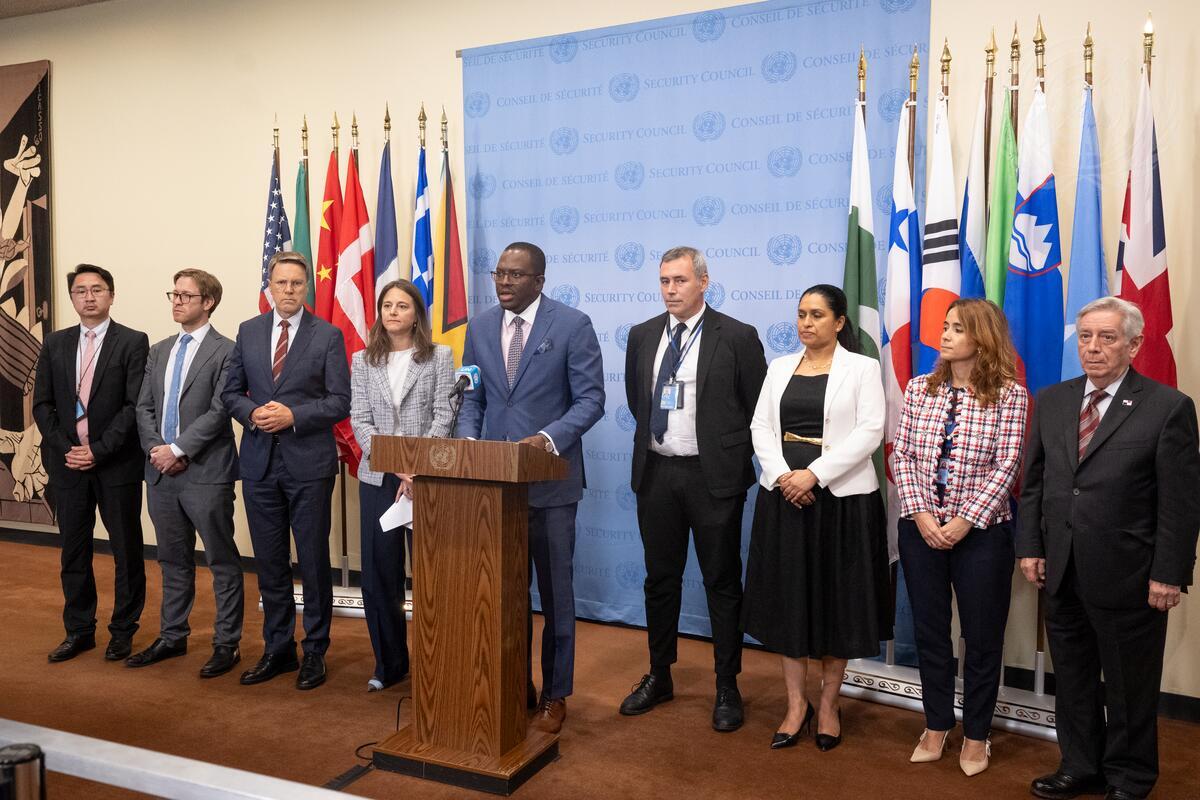
Statement delivered at Joint Security Council Stakeout on the situation in Darfur (ICC referral pursuant to resolution 1593) by Ambassador Michael Imran Kanu, Permanent Representative of Sierra Leone and Ambassador Sandra Jensen Landi, Deputy Permanent Representative of Denmark, and accompanied by Representatives from France, Greece, Guyana, Panama, Republic of Korea, Slovenia and United Kingdom
We deliver this statement on behalf of the Members of the Security Council that are State Parties to the Rome Statute of the International Criminal Court (ICC): France, Greece, Guyana, Panama, the Republic of Korea, Slovenia, the United Kingdom, and our own countries, Denmark, and Sierra Leone.
We extend our sincere gratitude to Deputy Prosecutor Nazhat Shameem Khan and the Office of the Prosecutor (“OTP” or “Office”) for presenting the 41st report of the Office to the United Nations Security Council on the situation in Darfur. We express our appreciation to the Office for their continued dedication to this mandate under exceptionally challenging circumstances.
We welcome the ongoing intensive activities with respect to the situation in Darfur reflected in the report. Based on extensive testimonial, digital and documentary evidence collected, the Office has confirmed it has reasonable grounds to believe that war crimes and crimes against humanity have been and continue to be committed in Darfur. We commend the sustained focus of the Office in delivering concrete landmarks through evidence-based investigations and strategic partnerships with diverse stakeholders. This progress demonstrates the unwavering commitment of the Office to accountability, despite operating in one of the world's most challenging environments.
We commend the proactive investigative approach of the Office, particularly its strategic deployments across the region. Operations in Eastern Chad and neighboring territories have strengthened vital connections with affected populations, while the Port Sudan mission advanced critical dialogue with national authorities and witness identification efforts.
We acknowledge the meaningful engagement of the Office with civil society partners during this period. The contributions of the Office to capacity-building initiatives supporting documentation efforts by Sudanese civil society organizations represent a vital partnership in strengthening both investigative capabilities and ensuring victim-centered approaches. It is essential to continue and deepen this engagement to build trust and amplify the voices of survivors.
We note the continued cooperation provided by the Sudanese authorities, including facilitation of the Port Sudan visit. We also urge the Sudanese authorities to further enhance their assistance by engaging more constructively with the Office regarding the arrest of suspects subject to ICC arrest warrants. Strengthening this cooperation is essential for meaningful progress.
We recognize that the Office faces considerable operational hurdles that impede effective mandate implementation. Responsiveness to assistance requests has declined, while security constraints severely limit Darfur access. Witness protection concerns in Chad and Darfur create additional barriers to cooperation, compounded by resource limitations given the scale of alleged crimes requiring investigation.
In this endeavor to combat impunity and ensure justice for victims, we call upon all States and relevant actors to support the OTP in addressing these multifaceted challenges through collaborative efforts, as detailed in the report. This includes fulfilling obligations under the Rome Statute and Security Council Resolution 1593, particularly regarding cooperation with arrest warrants and requests for assistance. International cooperation remains fundamental to ensuring justice for victims and upholding the rule of law.
Lastly, we reaffirm our unwavering commitment to the Court as an independent and impartial judicial institution. We remain steadfast in upholding the principles enshrined in the Rome Statute and defending the Court's integrity against any threats or actions targeting the institution, its officials, or cooperating partners. Such actions are counterproductive to our shared goal of ensuring accountability for the most serious crimes, promoting the rule of law, and fostering lasting respect for international law, including human rights.